
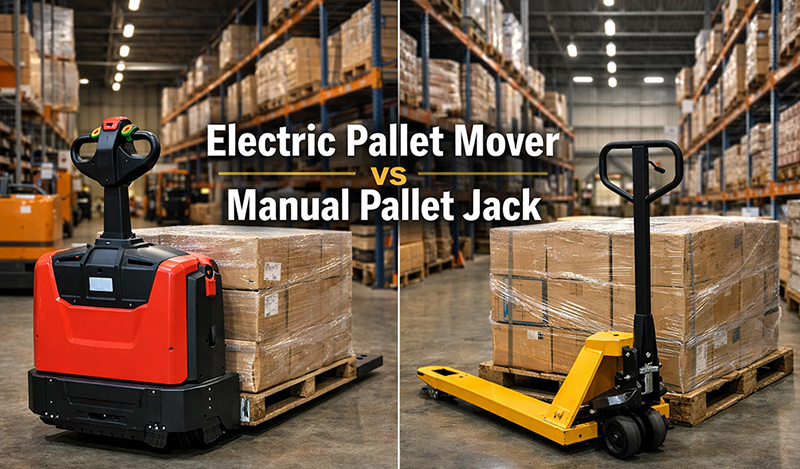
Comparing: Electric Pallet Mover vs Manual Pallet Jack
06 February 2026Moving pallets is one of those everyday warehouse tasks that doesn’t always get much attention—until something goes wrong, productivity slows down, or workers start feeling the strain. Whether you’re running a warehouse, distribution center, manufacturing facility, or retail backroom, choosing the right pallet-moving equipment can make a noticeable difference in efficiency, safety, and long-term operating costs.
Two of the most common tools used for this job are the manual pallet jack and the electric pallet mover. At first glance, they may seem to serve the same purpose—and in many ways, they do—but the way they operate, who they’re best suited for, and the impact they have on daily operations are very different.
This article breaks down what each piece of equipment is, how it’s used, and how to decide which one makes the most sense for your operation. Along the way, we’ll also touch on how Mobile Industries supports businesses with both options—and much more—when it comes to material handling solutions.
What Is a Manual Pallet Jack?
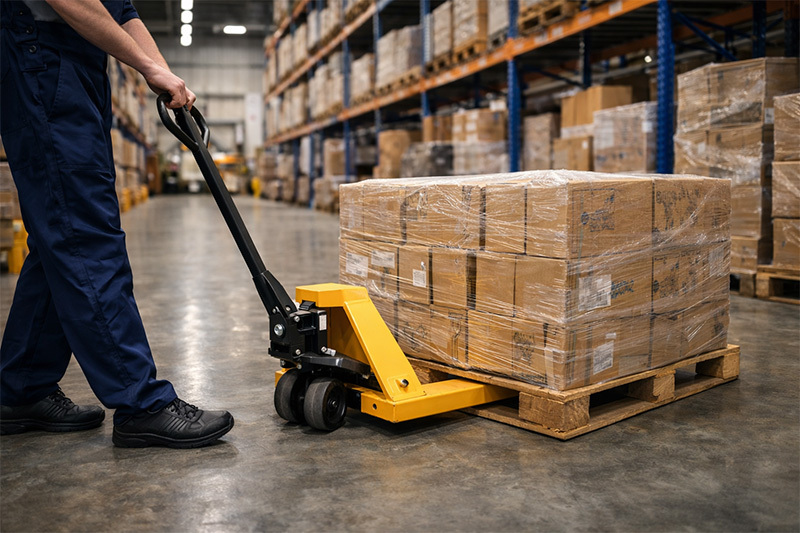
A manual pallet jack, sometimes called a hand pallet truck, is the most basic and widely used pallet-moving tool. It’s powered entirely by the operator, using a simple hydraulic system to lift pallets off the ground.
The operator slides the forks under the pallet, pumps the handle to raise it, and then pulls or pushes the load to its destination. To lower the pallet, a release lever is engaged, allowing the forks to descend smoothly.
Common Use Cases for Manual Pallet Jacks
Manual pallet jacks are commonly found in:
- Small warehouses
- Retail stockrooms
- Delivery trucks
- Light manufacturing environments
- Tight spaces where larger equipment can’t maneuver easily
They’re ideal for short-distance moves, lighter loads, and environments where pallets are handled occasionally rather than continuously.
Advantages of Manual Pallet Jacks
There’s a reason manual pallet jacks have been around for decades—they’re simple, reliable, and cost-effective.
Key benefits include:
- Low upfront cost
- No batteries or charging required
- Minimal maintenance
- Easy to train new operators
- Compact and highly maneuverable
For businesses with limited pallet movement or tight budgets, manual pallet jacks can be more than enough to get the job done.
Limitations to Consider
However, manual pallet jacks do have their drawbacks:
- They rely entirely on physical effort
- Moving heavy pallets can be exhausting over time
- Productivity drops during long shifts
- Increased risk of strain injuries with repetitive use
As workloads grow or operations scale, these limitations become more noticeable.
What Is an Electric Pallet Mover?
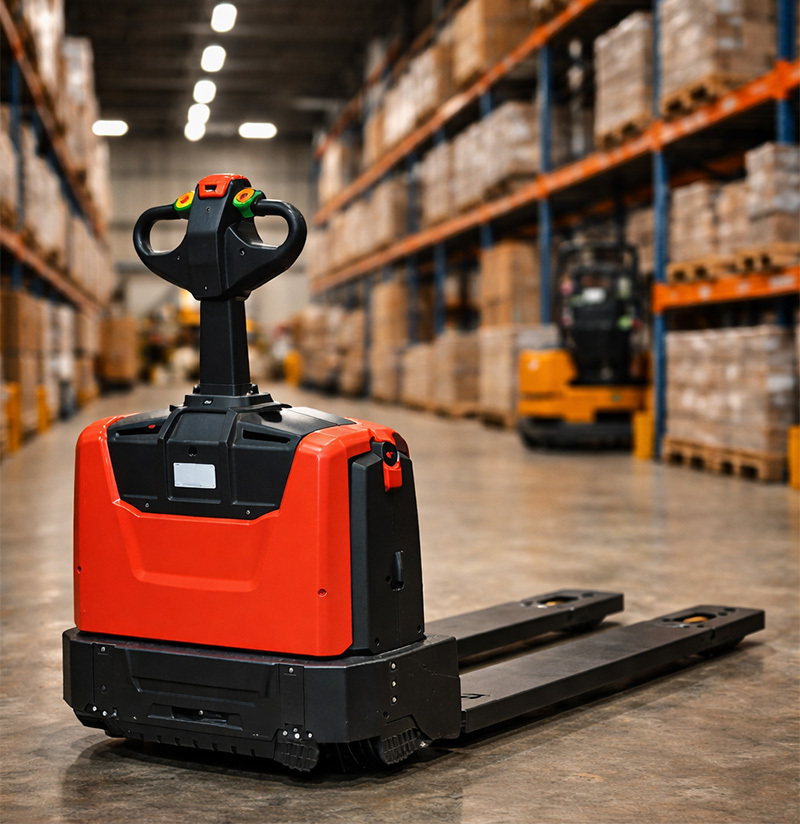
An electric pallet mover (also known as an electric pallet jack or powered pallet truck) performs the same basic task as a manual pallet jack—but with motorized assistance.
Instead of pumping and pulling manually, the operator uses electric controls to lift and move pallets. The motor handles the heavy work, significantly reducing physical strain and allowing loads to be transported faster and more consistently.
Common Use Cases for Electric Pallet Movers
Electric pallet movers are often used in:
- High-volume warehouses
- Distribution centers
- Manufacturing plants
- Cold storage facilities
- Operations with long travel distances
They’re particularly valuable in environments where pallets are moved frequently, over longer distances, or throughout long shifts.
Advantages of Electric Pallet Movers
Electric pallet movers offer a noticeable upgrade in both comfort and performance.
Key benefits include:
- Reduced operator fatigue
- Higher productivity and faster movement
- Consistent performance throughout the day
- Better handling of heavier loads
- Improved workplace ergonomics
Many modern electric pallet movers also feature safety enhancements like controlled acceleration, automatic braking, and ergonomic handles designed to reduce strain.
Considerations and Trade-Offs
While electric pallet movers bring clear advantages, they do come with additional considerations:
- Higher initial investment
- Battery charging and maintenance
- Slightly more complex training
- More components that require upkeep
That said, many businesses find that the productivity gains and reduced injury risk more than justify the added cost.
Key Differences: Electric Pallet Mover vs Manual Pallet Jack
While both tools serve the same core purpose, the difference comes down to how the work gets done and how often it needs to be done.
Power and Effort
- Manual pallet jacks rely entirely on human strength.
- Electric pallet movers use motors to lift and move loads with minimal effort.
Productivity
- Manual pallet jacks are well-suited for occasional or light use.
- Electric pallet movers shine in high-throughput environments where time and consistency matter.
Operator Fatigue
- Manual operation can be physically demanding over long periods.
- Electric movers significantly reduce strain, improving comfort and morale.
Cost Over Time
- Manual pallet jacks cost less upfront.
- Electric pallet movers often save money long-term through improved efficiency and reduced injury-related downtime.
Safety
- Both are safe when used properly.
- Electric pallet movers often include additional safety and control features that help in busy or fast-paced environments.
Which One Is Right for Your Operation?
There’s no universal answer—it depends on how your facility operates.
A manual pallet jack may be the right choice if:
- Pallets are moved occasionally
- Distances are short
- Loads are relatively light
- Budget constraints are a priority
An electric pallet mover is often the better option if:
- Pallets are moved frequently
- Operators work long shifts
- Loads are heavier
- Productivity and ergonomics are key concerns
Many businesses actually use both, depending on the task, department, or facility layout.
How Mobile Industries Supports Your Material Handling Needs
Choosing the right pallet-moving equipment isn’t just about the product—it’s about having the right partner. Mobile Industries provides both manual pallet jacks and electric pallet movers, along with a wide range of additional material handling equipment designed to support real-world operations.
From helping you select the right equipment to supporting maintenance, parts, and long-term reliability, Mobile Industries works with businesses to ensure their equipment actually fits their workflow—not the other way around.
Whether you’re upgrading an existing facility or setting up a new operation, having access to both manual and powered solutions gives you flexibility as your needs evolve.
Final Thoughts
Manual pallet jacks and electric pallet movers both play important roles in material handling. The key difference lies in scale, frequency, and physical demand. Manual pallet jacks offer simplicity and affordability, while electric pallet movers deliver speed, comfort, and consistency for more demanding operations.
Understanding how each fits into your workflow helps you make smarter decisions that support both productivity and worker well-being.
To explore pallet movers, pallet jacks, and a full range of material handling solutions, learn more at https://mobiltpt.com.