
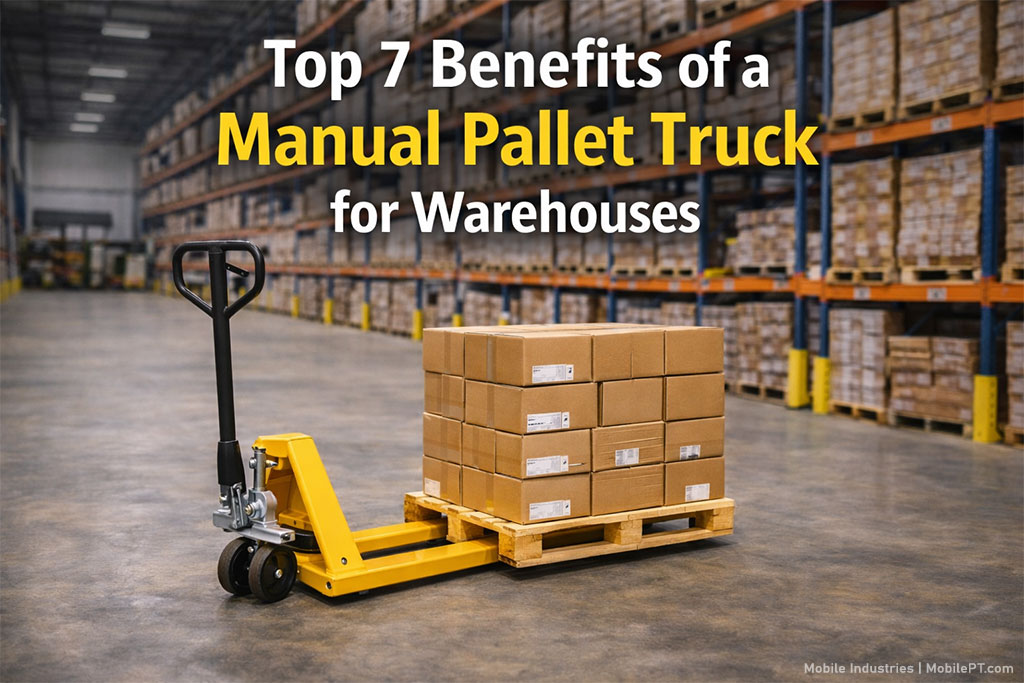
Top 7 Benefits of a Manual Pallet Truck for Warehouses
07 April 2026In a warehouse, not every job calls for a forklift or a powered machine. Sometimes the most dependable equipment is also the simplest. That is exactly why the manual pallet truck continues to be one of the most widely used tools in warehouses of every size.
Whether a facility handles incoming shipments, stores inventory, stages orders, or supports retail replenishment, a manual pallet truck plays an important role in day-to-day operations. It is practical, cost-effective, easy to use, and ideal for moving palletized loads across short distances without the complexity of powered equipment.
For many warehouse managers, the value of a manual pallet truck comes down to reliability and versatility. It is one of those tools that keeps operations moving without requiring much attention. Below are seven of the biggest benefits of using a manual pallet truck in a warehouse.
Lower Upfront Cost
One of the clearest benefits of a manual pallet truck is affordability. Compared to forklifts, powered pallet movers, and other electric material handling equipment, a manual unit is far less expensive to purchase.
That lower upfront cost makes it a smart option for:
- Small warehouses
- Startups and growing businesses
- Retail stockrooms
- Budget-conscious operations
- Facilities that need multiple units on hand
Instead of investing heavily in powered equipment for every area of a warehouse, many businesses use manual pallet trucks for lighter-duty movement and reserve larger machines for more demanding jobs.
For operations looking to improve material handling without taking on a large capital expense, this is often the easiest place to start.
Simple and Easy to Use
A manual pallet truck is straightforward. There are no complicated controls, no batteries to charge, and no advanced systems to learn. Operators slide the forks under a pallet, pump the handle to raise the load, and then push or pull it where it needs to go.
That simplicity creates several advantages in a warehouse setting. Training is faster, new employees can become comfortable with the equipment quickly, and there is less risk of confusion during daily use.
Because the machine is so easy to operate, it fits naturally into fast-moving warehouse environments where efficiency matters. Staff can use it with minimal downtime or setup, which helps maintain workflow throughout the day.
Low Maintenance Requirements
One reason warehouses continue to rely on the manual pallet truck year after year is that it does not demand much maintenance.
Unlike electric equipment, a manual pallet truck has no battery, motor, controller, or charging system. Its design is mechanical and durable, which means fewer components that can break down.
Routine maintenance usually includes:
- Checking wheels for wear
- Inspecting the hydraulic system
- Lubricating moving parts
- Making sure forks remain in good condition
That simplicity reduces service costs and minimizes downtime. In busy warehouse operations, dependable equipment matters. A manual pallet truck delivers that kind of reliability without adding maintenance headaches.
Excellent for Short-Distance Pallet Movement
Not every pallet in a warehouse needs to be moved across long distances. Many are shifted only a short way, such as from a receiving area to nearby storage, from one aisle to a staging zone, or within a packing area.
This is where a manual pallet truck performs especially well.
It is ideal for:
- Moving pallets in receiving areas
- Repositioning inventory within aisles
- Staging orders for shipment
- Supporting packing and shipping stations
- Handling pallets inside trailers or containers
For short-distance transport, a manual pallet truck is often faster and more practical than bringing in larger equipment. It allows employees to quickly reposition loads without tying up forklifts or powered pallet trucks that may be needed elsewhere.
Strong Maneuverability in Tight Warehouse Spaces
Warehouses are not always wide open. Many have narrow aisles, compact storage zones, tight trailer interiors, and busy staging areas where space is limited.
A manual pallet truck is well suited to these environments because it is compact and highly maneuverable. Operators can guide it into smaller areas where larger equipment may struggle to fit.
This is especially useful in:
- Narrow warehouse aisles
- Loading docks
- Retail backrooms
- Delivery trailers
- Overflow storage zones
Because of its size and simplicity, a manual pallet truck gives warehouse teams flexibility. It can be used in places where larger machines would be inconvenient, inefficient, or simply impractical.
Reliable Backup to Powered Equipment
Even warehouses with electric pallet movers and forklifts still benefit from having manual pallet trucks on hand. In many operations, they serve as an essential backup.
If a powered unit is unavailable, in use elsewhere, charging, or down for service, a manual pallet truck can keep work moving. That backup value is often overlooked until it is needed.
Manual pallet trucks are useful as support equipment for:
- Temporary overflow workload
- Equipment downtime situations
- Quick pallet repositioning
- Emergency use during busy periods
- Departments that do not need powered handling full-time
In other words, they give warehouses flexibility. Even if a facility depends heavily on powered machines, manual pallet trucks still earn their place because they help prevent workflow disruptions.
Ideal for Light-to-Moderate Warehouse Workloads
Not every warehouse operates like a high-volume distribution center. Some facilities handle moderate pallet movement throughout the day without the need for electric equipment on every task.
For these environments, manual pallet trucks can be the perfect fit.
It works especially well for:
- Smaller operations with manageable pallet volume
- Warehouses with lighter daily movement
- Businesses that want practical material handling without overcomplicating things
- Teams that need dependable equipment for routine tasks
A manual pallet truck gives these operations the lifting and transport capability they need without unnecessary cost or complexity. It is often the right balance between function and efficiency.
Final Thoughts
The manual pallet truck remains one of the most useful tools in warehouse operations for a reason. It is affordable, simple to use, easy to maintain, highly maneuverable, and dependable for everyday pallet movement.
While electric equipment certainly has its place, a manual pallet truck continues to offer real value for warehouses that need a practical and proven solution for short-distance load handling. In many cases, it is not just a starter tool or backup option. It is a core part of daily operations.
For warehouses focused on reliability, efficiency, and cost control, the manual pallet truck still makes a lot of sense.
What is a manual pallet truck used for?
A manual pallet truck is used to lift and move palletized goods within a warehouse, factory, or storage facility. It is commonly used for short-distance transportation, loading and unloading shipments, and repositioning pallets in tight warehouse spaces.
What is the difference between a manual pallet truck and an electric pallet truck?
A manual pallet truck is operated by pumping a handle to lift the load and manually pushing or pulling the pallet. An electric pallet truck uses a motor and battery to move loads automatically. Manual pallet trucks are more affordable, while electric options are better for high-volume operations.
How much weight can a manual pallet truck handle?
Most manual pallet trucks can handle loads between 4,000 and 5,500 pounds depending on the model. Some heavy-duty versions can handle even higher capacities, making them suitable for many warehouse and industrial applications.
Are manual pallet trucks suitable for small warehouses?
Yes, a manual pallet truck is ideal for small warehouses. They are compact, affordable, and easy to maneuver, making them perfect for facilities with limited space and moderate pallet movement.
When should I choose a manual pallet truck over an electric pallet truck?
A manual pallet truck is best when moving pallets short distances, handling lighter workloads, or working in smaller warehouse environments. Businesses often choose manual pallet trucks when they want a reliable, low-maintenance solution without the cost of powered equipment.