
Material Handling Scissor Lifts for Work Height and Load Positioning
Material handling scissor lifts combine short-distance load movement with adjustable vertical positioning for skids, bottomless containers, conveyor work, packing, production, and mobile workstation applications. Mobile Industries offers manual pump, battery-operated, ECO manual, ECO battery, and stainless steel scissor lift configurations for facilities that need to raise loads to a more useful working height. These units are different from aerial scissor lifts used to elevate personnel. Selection should focus on load capacity, fork dimensions, lowered and raised height, load compatibility, lift frequency, floor conditions, and whether corrosion resistance or powered lifting is required.
Material Handling Scissor Lift Comparison Chart
| Scissor Lift Type | Best Application | Selection Advantage |
| ECO Manual Scissor Lift | General load positioning | Manual operation for intermittent lifting |
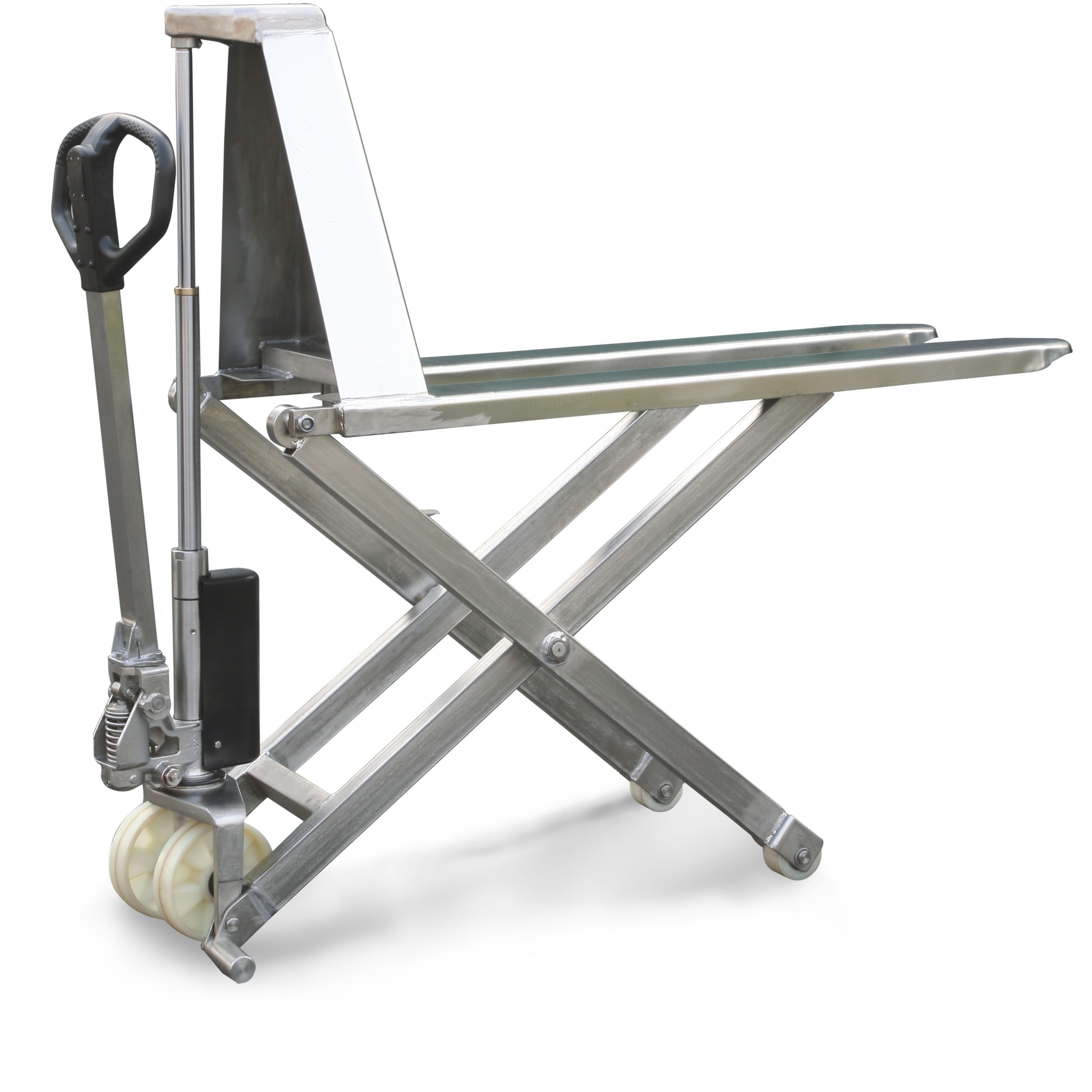
| ECO Stainless Steel Scissor Lift | Wet or corrosion-sensitive areas | Stainless construction for demanding environments |
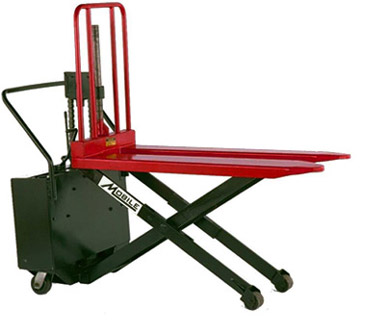
| ECO Battery Scissor Lift | Frequent lifting cycles | Powered height adjustment |
| Manual Pump Scissor Lift | Skid transport and conveyor support | Combines transport with work-height positioning |
| Battery Scissor Lift | Higher-frequency production use | Powered lift for repeated workstation tasks |



Choosing a Scissor Lift for Skids, Conveyors and Workstations
Begin with load compatibility. Material handling scissor lifts often use fork-style support and may be intended for skids or bottomless containers rather than every pallet design. Confirm fork width, fork length, lowered height, and the underside of the load before buying. Next, determine how often the load will be raised. Manual pump models can be effective for periodic use, while battery-powered versions are better suited to repeated adjustments. For conveyor loading or workstation applications, compare the maximum raised height with the equipment or process the lift must serve. Floor condition, travel distance, wheel design, braking, moisture, and corrosion exposure should also be reviewed. A correctly selected unit can handle transport and vertical positioning in one workflow.
Before choosing equipment, confirm:
- Load capacity and skid or container compatibility
- Fork dimensions and minimum lowered height
- Maximum working height and conveyor alignment
- Manual versus battery-powered lift frequency
- Floor conditions, travel distance, braking, and corrosion exposure
Frequently Asked Questions
Are material handling scissor lifts the same as aerial scissor lifts?
No. The products in this category are designed to lift and position materials, skids, or compatible containers, not to elevate personnel.
What can a warehouse scissor lift be used for?
Common uses include moving and raising skids, loading or unloading conveyors, positioning materials for production, and serving as a mobile work station.
When should I choose a battery scissor lift?
Battery-powered models are well suited to applications with frequent lifting cycles where powered height adjustment can reduce manual pumping.
Do all pallets work with scissor lift trucks?
No. Compatibility depends on the fork design, pallet or skid underside, fork openings, dimensions, and load distribution. Confirm the specific load before selecting a model.
When is a stainless steel scissor lift appropriate?
A stainless steel model can be useful where the equipment may be exposed to water, cleaning processes, or corrosive materials and added corrosion resistance is important.